
Trochanteric Bursitis
Inflammation of the hip bursa causing pain, swelling, and reduced mobility
Trochanteric bursitis is a condition characterised by inflammation of the bursa; a fluid-filled sac located on the outer side of the hip. This condition often results in pain, tenderness, and swelling, particularly when walking or lying on the affected side. Melbourne Orthopaedic Clinic specialises in diagnosing and treating trochanteric bursitis to alleviate discomfort and improve mobility.
On this page, you’ll learn about:
Causes Of Trochanteric Bursitis
Trochanteric bursitis is often caused by repetitive stress or trauma, but various other factors can contribute to this painful condition. Common causes include:
- Overuse or Repetitive Motion: Activities that place strain on the hip, such as running, cycling, or stair climbing, can irritate the bursa over time, leading to inflammation.
- Hip Injury: A direct blow or trauma to the hip, such as a fall, can cause damage to the bursa, triggering inflammation.
- Leg Length Discrepancy: Having one leg shorter than the other can lead to uneven stress on the hip, increasing the risk of bursitis.
- Chronic Conditions: Conditions such as osteoarthritis, rheumatoid arthritis, and gout can cause inflammation around the hip joint, including the bursa.
- Weak Hip Muscles: Weakness in the hip muscles can lead to instability and improper movement patterns, contributing to irritation of the bursa.
Symptoms Of Trochanteric Bursitis
Symptoms of trochanteric bursitis are often localised around the hip and may worsen with certain activities. Common symptoms include:
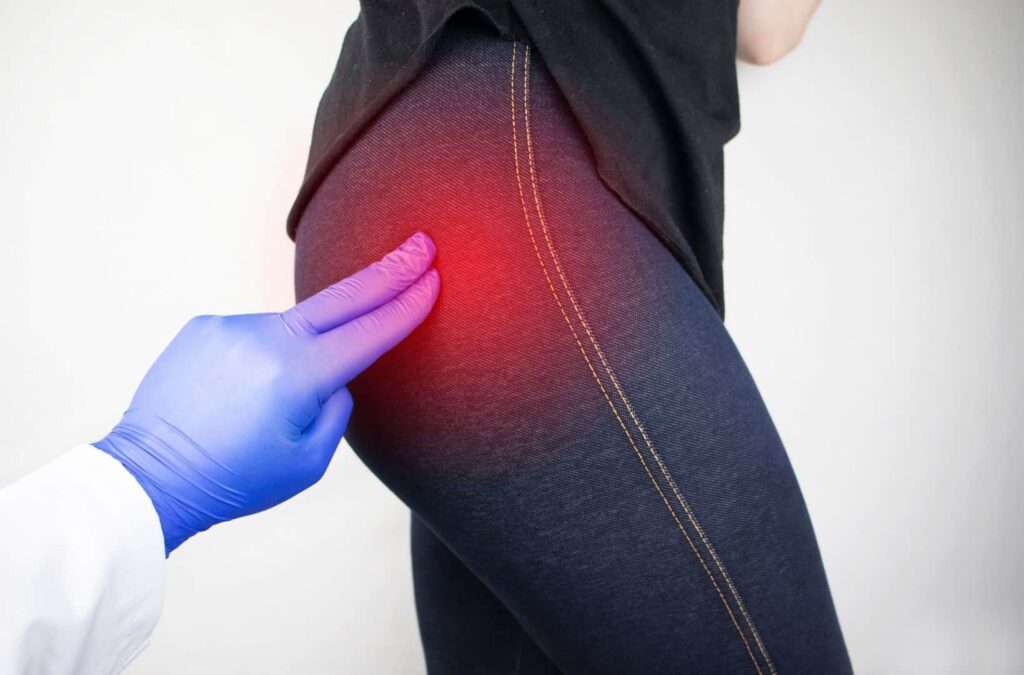
- Hip Pain: Pain is typically felt on the outside of the hip and can extend down the thigh. Pain may worsen with activities like walking, climbing stairs, or lying on the affected side.
- Tenderness to Touch: The outer side of the hip may feel tender and sensitive to pressure, particularly when pressing on the area.
- Swelling: In some cases, mild swelling or warmth may be present over the outer hip, a sign of inflammation in the bursa.
- Pain with Activity: Physical activities, especially those that involve hip movement, can intensify the pain.
- Difficulty with Daily Activities: Pain and discomfort may limit the ability to walk, exercise, or lie comfortably on the affected side.
Diagnosis Of Trochanteric Bursitis
Diagnosis of trochanteric bursitis begins with a detailed medical history and physical examination. Your surgeon will ask about your symptoms, their duration, and any activities that may trigger or worsen the pain. During the examination, they will assess the hip for tenderness over the greater trochanter (the bony point on the outer hip), pain with certain movements, and signs of reduced flexibility or strength.
In most cases, a clinical assessment is sufficient to confirm the diagnosis. However, imaging tests may be used to rule out other causes of hip pain, such as arthritis, tendon injuries, or fractures. These may include:
- X-rays – to check for underlying bone or joint changes.
- Ultrasound – to detect inflammation in the bursa or surrounding tendons.
- MRI – occasionally used for a more detailed view of the soft tissues when symptoms are complex or persistent.
Accurate diagnosis ensures that appropriate treatment, whether conservative measures or, in rare cases, surgical options, can be planned to relieve symptoms and improve hip function.
Trochanteric Bursitis Treatment Options
Treatment for trochanteric bursitis focuses on reducing inflammation, relieving pain, and restoring mobility. Melbourne Orthopaedic Clinic offers both non-surgical and surgical options to suit individual needs.
NON-SURGICAL TREATMENTS
Most cases of trochanteric bursitis are effectively managed with non-surgical treatments, including:
- Physiotherapy: A physiotherapist can guide you through exercises to strengthen the hip muscles, improve flexibility, and reduce strain on the bursa.
- Medications: Non-steroidal anti-inflammatory drugs (NSAIDs) may be recommended to reduce inflammation and manage pain.
- Activity Modification: Avoiding activities that worsen symptoms, like prolonged standing or intense physical activity, can reduce irritation of the bursa.
- Injections: Corticosteroid injections can provide significant relief from pain and inflammation, offering temporary symptom control for those with persistent pain.
SURGICAL TREATMENTS
If non-surgical options are not effective or if the condition persists, surgical intervention may be considered. Surgical options include:
- Bursectomy: In rare cases, if inflammation is severe and other treatments have been unsuccessful, a bursectomy may be performed to remove the inflamed bursa. This procedure is minimally invasive and helps relieve pain and improve function.
At Melbourne Orthopaedic Clinic, we understand the impact of trochanteric bursitis on daily life and physical activity. Our team is committed to providing personalised care and effective treatment options to alleviate pain and restore mobility. Through targeted therapy and, if necessary, surgical intervention, we work with you to support a full recovery and return to daily activities.