

Reverse Total Shoulder Replacement (Arthroplasty)
Advanced surgical solutions for severe rotator cuff damage and shoulder arthritis
Reverse Total Shoulder Replacement (RTSA) is a specialised surgical procedure designed to treat shoulder arthritis, rotator cuff tears, and severe joint damage that cannot be effectively addressed with conventional shoulder replacement methods. This innovative surgery reverses the natural mechanics of the shoulder joint, allowing the deltoid muscle to take over the function of the damaged rotator cuff, improving shoulder function and alleviating pain.
What is Reverse Total Shoulder Replacement?
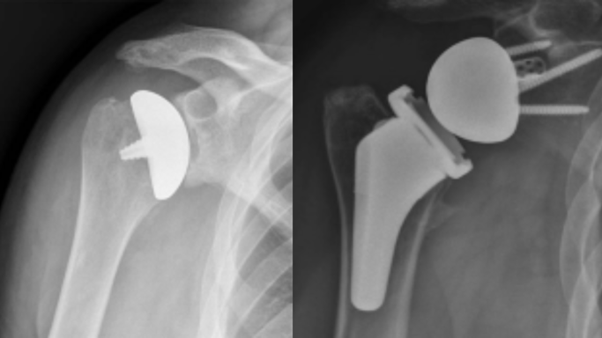
Reverse Total Shoulder Replacement involves switching the normal ball-and-socket mechanics of the shoulder joint. The ball (humeral head) is removed and replaced with a socket, while the socket (glenoid) in the shoulder blade is replaced with a ball-shaped prosthesis. This reversal allows the deltoid muscle to perform movements that are usually controlled by the rotator cuff, particularly in cases of irreparable rotator cuff tears.
Indications for Reverse Total Shoulder Replacement
Reverse shoulder replacement is typically recommended for patients with:
- Rotator Cuff Tear Arthropathy: Severe rotator cuff tears leading to arthritis and joint instability.
- Massive, Irreparable Rotator Cuff Tears: Extensive damage to the rotator cuff muscles that cannot be repaired surgically.
- Shoulder Arthritis with Rotator Cuff Damage: A combination of joint arthritis and significant rotator cuff injury.
- Complex Shoulder Fractures: Severe fractures that are not suitable for reconstruction.
- Failed Shoulder Replacement Surgery: In cases where a previous shoulder replacement has failed due to rotator cuff damage.
Reverse Total Shoulder Replacement Procedure
At Melbourne Orthopaedic Clinic, we offer state-of-the-art reverse total shoulder replacement using minimally invasive techniques to ensure faster recovery and improved outcomes. The procedure involves:
- Anaesthesia and Preparation: Performed under general anaesthesia or nerve block to ensure patient comfort.
- Removing the Damaged Joint Components: The damaged humeral head and glenoid socket are removed, along with any bone spurs or deformities caused by arthritis.
- Reversing the Joint Mechanics:
- The humerus is fitted with a socket-shaped component that allows it to accommodate the ball-shaped component placed in the glenoid.
- The glenoid is fitted with a ball-shaped prosthesis, allowing the deltoid muscle to lift the arm and compensate for the damaged rotator cuff.
- Securing the Prosthesis: The components are fixed using medical cement or press-fit, depending on the patient’s bone quality, ensuring a stable joint that moves smoothly.
Recovery After Reverse Total Shoulder Replacement
Recovery is a critical component of reverse shoulder replacement, and rehabilitation is tailored to each patient’s needs to ensure optimal healing and function.
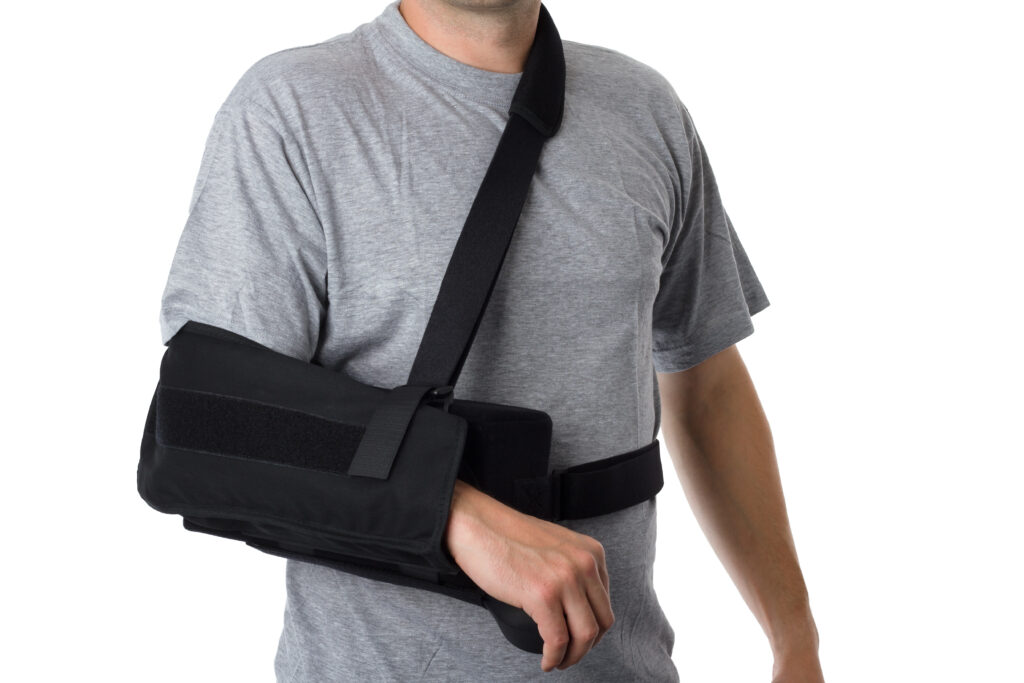
- Immediate Post-Surgery (1-2 Weeks): Patients typically stay in the hospital for 1-2 nights, and the shoulder will be immobilised in a sling. Pain relief medications are administered to manage discomfort.
- Early Rehabilitation (2-6 Weeks): Passive range-of-motion exercises begin under physiotherapy supervision to prevent stiffness while protecting the joint.
- Intermediate Rehabilitation (6-12 Weeks): Active range-of-motion exercises are introduced to increase flexibility, with a gradual reduction in sling use.
- Late Rehabilitation (3-6 Months): Strengthening exercises are introduced to rebuild shoulder muscle and improve functional capacity.
- Full Recovery (6-12 Months): Most patients achieve significant pain relief and improved mobility within the first few months, with full recovery typically taking up to a year.
Long-Term Outcomes
Reverse total shoulder replacement provides excellent long-term outcomes for patients with severe rotator cuff dysfunction. With proper rehabilitation, most patients experience a significant reduction in pain, improved shoulder function, and the ability to resume daily activities, including light exercise. Although full range of motion may not be fully restored, the improvement in function is substantial, especially for those who could not benefit from traditional shoulder replacement methods.
Risks and Complications
Like any surgical procedure, reverse shoulder replacement carries some risks. While complications are rare, potential risks include:
- Infection: Can occur at the surgical site and may require antibiotics or additional surgery.
- Blood Clots: Formation of blood clots can occur, managed with blood-thinning medications.
- Dislocation: The newly implanted shoulder joint may dislocate if excessive stress is placed on it during the healing process.
- Prosthetic Complications: Rare issues include loosening or wear of the prosthetic components, requiring additional surgery in some cases.
- Nerve Injury: In some cases, nerve damage can occur, potentially affecting movement and sensation in the arm.
At Melbourne Orthopaedic Clinic, our team of specialists is dedicated to minimising risks and ensuring the best possible outcomes for reverse shoulder replacement surgeries. We offer personalised care and advanced surgical techniques to help you regain shoulder function and reduce pain.
Reverse Total Shoulder Replacement is an effective solution for individuals with severe shoulder conditions that can’t be managed through conservative treatments. Contact us today to schedule a consultation with our expert orthopaedic surgeons and explore how this procedure can help you regain a pain-free, active lifestyle.