

Quadriceps Tendon Repair
Restoring strength and function to the knee joint
The quadriceps tendon connects the quadriceps muscle to the patella (kneecap) and plays a crucial role in knee extension, allowing activities like walking, running, and jumping. A quadriceps tendon rupture is a serious injury that typically occurs due to trauma, such as falls or direct blows to the knee. Quadriceps tendon repair surgery aims to restore the tendon to its original position, helping to regain knee function and stability.
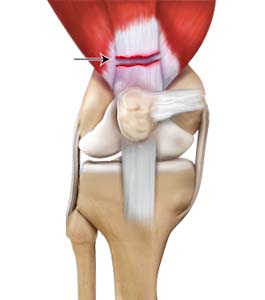
What is a Quadriceps Tendon Repair?
Quadriceps tendon repair is a surgical procedure used to reattach a torn or ruptured quadriceps tendon to the patella. The surgery involves stitching the torn tendon back into place and, if necessary, using additional procedures to strengthen the tendon or knee joint. The goal is to restore knee function, prevent complications such as joint instability, and enable patients to return to normal activities.
Indications for Quadriceps Tendon Repair
Quadriceps tendon repair may be necessary when:
- The quadriceps tendon is completely ruptured or torn, typically due to trauma or direct impact.
- The tendon is detached from the patella, affecting the ability to extend the knee properly.
- Non-surgical treatments, such as rest and physiotherapy, are insufficient to restore knee function.
- The patient experiences significant pain, weakness, or disability as a result of the injury.
The Quadriceps Tendon Repair Procedure
Quadriceps tendon repair is typically performed under general or regional anaesthesia and follows these steps:
- Anaesthesia: The surgery is usually carried out under general anaesthesia or regional (spinal) anaesthesia.
- Incision: The surgeon makes an incision over the knee, typically above the kneecap, to access the quadriceps tendon.
- Tendon Repair: The torn tendon is reattached to the patella using sutures or anchors. In some cases, additional procedures may be used to augment the repair, such as tendon grafts or reinforcing stitches.
- Closure: Once the tendon is securely reattached, the incision is closed using sutures, and a sterile dressing is applied.
Recovery After Quadriceps Tendon Repair
Post-operative care is essential for a successful recovery following quadriceps tendon repair. Patients can expect:
- Hospital Stay: Most patients will stay in the hospital for a short period following the surgery, typically one to two days.
- Weight Bearing: Weight-bearing is usually restricted initially to protect the healing tendon. Patients may be advised to use crutches or a knee brace to prevent pressure on the repaired area.
- Rehabilitation: A structured rehabilitation program, including physical therapy, is critical for regaining strength, flexibility, and mobility. Early rehabilitation may include gentle range-of-motion exercises, followed by strengthening exercises as healing progresses.
- Return to Activity: Returning to sports or heavy physical activity can take several months, with full recovery often requiring 6 to 12 months, depending on the severity of the injury and rehabilitation progress.
Long-term Outcomes
Most patients who undergo quadriceps tendon repair surgery experience significant improvements in knee strength, mobility, and function. Successful rehabilitation can lead to a full return to daily activities and sports. However, some patients may experience ongoing stiffness, weakness, or discomfort, especially if the injury was severe or if the repair was delayed.
Risks and Complications
Like any surgical procedure, quadriceps tendon repair carries certain risks, including:
- Infection at the surgical site
- Blood clots (deep vein thrombosis)
- Tendon re-tear or repair failure
- Knee stiffness or limited range of motion
- Nerve or blood vessel injury
- Chronic pain or weakness in the knee
The team at the Melbourne Orthopaedic Clinic will thoroughly discuss these risks and take every precaution to minimise complications and optimise recovery.
Quadriceps tendon repair is an effective procedure for restoring knee function following a tendon injury. With expert care and rehabilitation, patients can look forward to regaining strength, stability, and the ability to return to their daily activities.