
Hip Fracture
Serious injury affecting mobility, requiring immediate treatment
Hip fractures are serious injuries that can have a significant impact on mobility, independence, and overall quality of life, particularly in older adults. A hip fracture refers to a break in the upper part of the femur (thighbone), usually near the hip joint. These injuries most commonly occur as a result of a fall, but may also be linked to weakened bones from osteoporosis or trauma.
At Melbourne Orthopaedic Clinic, we provide timely, specialised care for patients with hip fractures. Because these injuries are often considered orthopaedic emergencies, early diagnosis and prompt surgical treatment are essential to reduce the risk of complications, relieve pain, and support the best possible recovery.
On this page, you’ll learn about:
Causes Of Hip Fracture
Hip fractures can result from various factors, with age and bone health being the primary influences. The main causes include:
- Falls: Most hip fractures in older adults occur due to falls, often from a standing height.
- Osteoporosis: Bone weakness from osteoporosis makes the hip bone more susceptible to fractures, even from minor traumas.
- High-Impact Injuries: Younger individuals may sustain hip fractures due to high-impact trauma, such as car accidents or sports injuries.
- Other Health Conditions: Conditions like cancer or metabolic bone diseases may weaken bones, increasing fracture risk.
Symptoms Of Hip Fracture
Hip fractures present with noticeable symptoms, often making it difficult to walk or bear weight on the affected side. Common signs include:
- Severe Hip or Groin Pain: Pain may be constant or worsen with movement, often located in the hip or upper thigh.
- Inability to Walk or Stand: Many people with hip fractures cannot put weight on the injured leg or have difficulty standing.
- Leg Deformity or Shortening: The leg on the injured side may appear shorter or rotated outward.
- Swelling and Bruising: Visible bruising and swelling around the hip area may be evident following the fracture.
Diagnosis Of Hip Fracture
At Melbourne Orthopaedic Clinic, diagnosing a hip fracture begins with a physical examination to assess range of motion, strength, and discomfort. Diagnostic imaging confirms the diagnosis and determines fracture type and location:
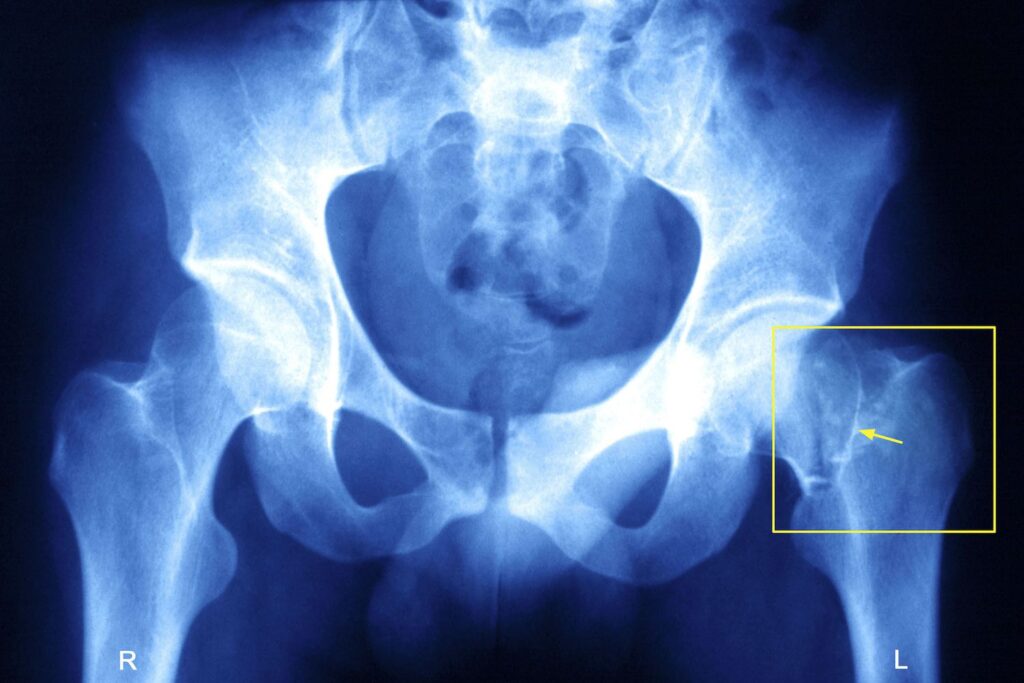
- X-rays: The primary imaging method for hip fractures, X-rays reveal the location and severity of the break.
- MRI or CT Scan: For complex fractures or when X-rays are inconclusive, MRI or CT scans provide detailed images of soft tissue and bone structure, ensuring accurate diagnosis.
Hip Fracture Treatment Options
Treatment for a hip fracture depends on fracture type, severity, patient age, and activity level. At Melbourne Orthopaedic Clinic, our goal is to restore function, reduce pain, and prevent complications. Options include:
NON-SURGICAL TREATMENTS
Some minor or stable fractures may be managed without surgery, particularly if surgery poses risks due to age or other health factors. Non-surgical treatments may include:
- Immobilisation: The use of slings, braces, or traction can immobilise the hip, aiding recovery.
- Pain Management: Medication may be used to control pain and reduce inflammation while the fracture heals.
- Rehabilitation: Physiotherapy helps strengthen the muscles surrounding the hip, promoting better support and mobility as the hip heals.
SURGICAL TREATMENTS
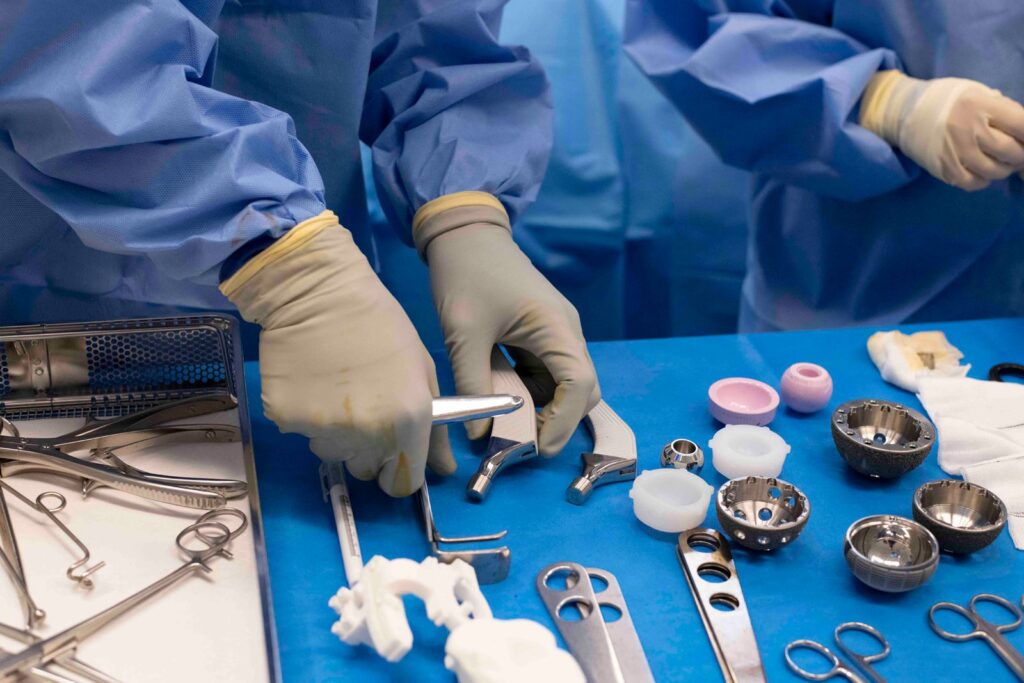
In most cases, surgery is required to properly align and stabilise the fractured bone. Surgical options at Melbourne Orthopaedic Clinic include:
- Internal Fixation: Screws, plates, or rods are used to stabilise the broken bone, helping it heal in the correct position.
- Partial Hip Replacement: In certain cases, the damaged portion of the hip joint is replaced with an artificial implant, typically when the fracture affects the femoral head.
- Total Hip Replacement: For severe fractures, total hip replacement may be performed to replace the entire hip joint, restoring mobility and reducing pain.
Melbourne Orthopaedic Clinic provides tailored hip fracture treatments to restore mobility, relieve pain, and improve quality of life. With options ranging from non-surgical rehabilitation to advanced surgical intervention, our team is committed to supporting you through recovery and ensuring the best possible outcome.