

Bilateral Total Hip Replacement Surgery
Relieving pain and restoring function when both hips are affected
If you’re experiencing severe arthritis or joint damage in both hips, you may benefit from bilateral total hip replacement surgery. This procedure involves replacing both hip joints with prosthetic implants, either in the same operation or as two separate surgeries. While not suitable for everyone, bilateral hip replacement can be a life-changing solution for patients with advanced joint disease on both sides, helping restore mobility, reduce pain, and improve quality of life.
Topics covered on this page:
- What bilateral hip replacement involves
- When it might be recommended
- The difference between simultaneous and staged procedures
- Surgical techniques and advanced technology used
- What recovery looks like if you have both hips replaced
- Risks, considerations, and expected outcomes
- How we support you with personalised planning and the POP app
- Whether this surgery may be right for you
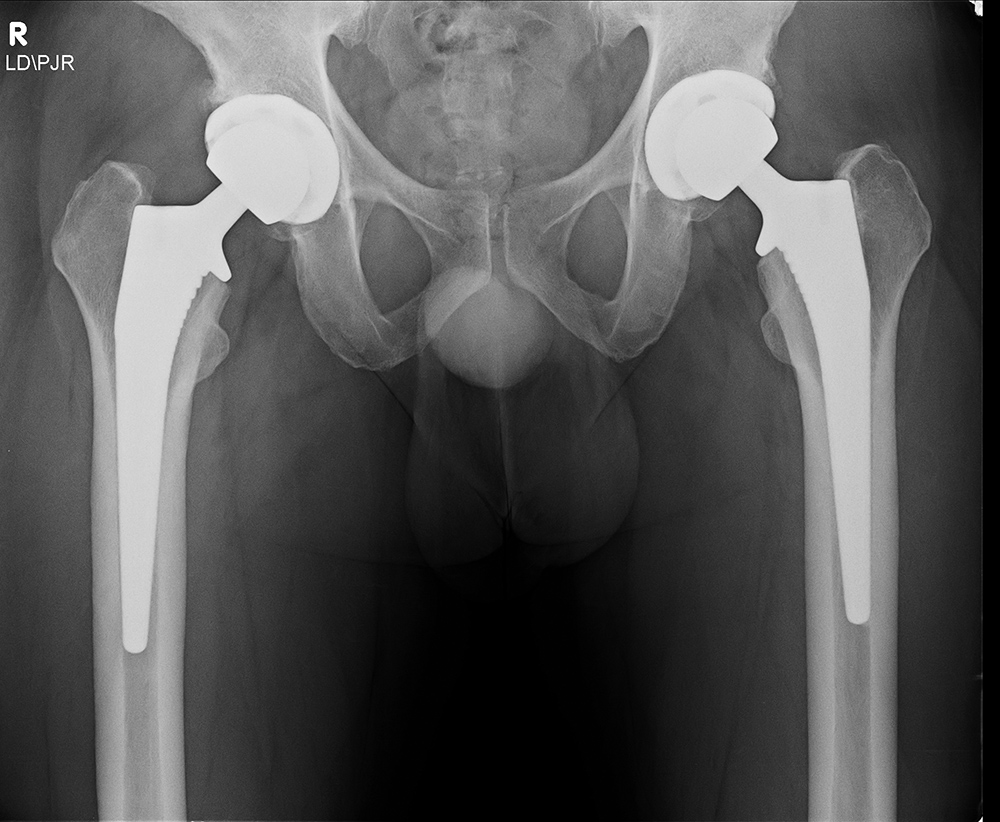
What bilateral hip replacement involves
Bilateral total hip replacement is a procedure where both hip joints are replaced with prosthetic implants. This involves removing the damaged cartilage and bone in each hip, reshaping the socket (acetabulum), and inserting a prosthetic cup and stem into the pelvis and femur.
The surgical goal is to recreate healthy joint movement on both sides, restore your leg length balance, and improve overall function. The procedure may be performed either during the same operation (simultaneous) or as two separate surgeries (staged).
When it might be recommended
Bilateral hip replacement may be recommended if:
- Both hips are severely affected by arthritis or damage
- You have persistent pain on both sides, limiting your walking, sitting, or sleeping
- Imaging (X-rays, MRI, or CT scans) confirms advanced degeneration in both joints
- Non-surgical treatments like medications, physiotherapy, or injections are no longer effective
Your overall health, age, bone quality, and lifestyle goals will all be considered before recommending bilateral surgery. The decision to replace one or both hips is made carefully in consultation with your surgeon.
The difference between simultaneous and staged procedures
Simultaneous bilateral hip replacement involves operating on both hips during the same surgery, under one anaesthetic. This approach may be considered if you’re in good general health and able to tolerate a longer procedure. The benefit is a single hospital stay and one recovery period, which can reduce total downtime.
Staged bilateral hip replacement means each hip is replaced in a separate operation, spaced several weeks or months apart. This allows you to recover from one side before addressing the other and may be preferred if there are medical concerns or if a slower recovery timeline is more appropriate.
Your surgeon will recommend the best approach based on your condition, fitness level, and preferences
Surgical techniques and advanced technology used
At Melbourne Orthopaedic Clinic, Professors Justin Hunt and Vera Sallen use precision-based surgical planning and techniques to perform bilateral hip replacement procedures safely and effectively.
Advanced tools include:
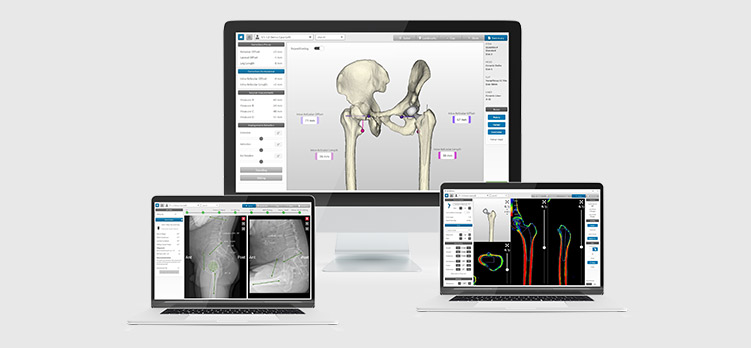
- MyHip 3D Planning Software to virtually model your hips and plan implant size, orientation, and leg length correction
- Custom 3D-printed surgical guides that match your anatomy and support accurate execution of your surgical plan
- Intraoperative imaging and software verification to assess implant positioning and biomechanics in real time
Both the anterior approach (minimally invasive with muscle-sparing access) and the posterior approach (traditional access with broader exposure) may be used, depending on your anatomy and surgical goals. The same meticulous standards apply whether your surgery is simultaneous or staged.
What recovery looks like if you have both hips replaced
Recovery after bilateral hip replacement will vary depending on whether your surgeries are simultaneous or staged.
If done simultaneously:
- You will likely stay in hospital a little longer — typically 3 to 5 days, depending on your progress
- Physiotherapy will begin on the day of or the day after surgery
- You will need walking aids (e.g. frame, crutches) for several weeks
- Most patients require assistance at home in the early stages, particularly for activities like dressing, toileting, and mobility
If staged:
- You’ll undergo two separate recovery periods
- The first side is typically more challenging; by the second, most patients find the process more familiar and manageable
Rehabilitation will include a tailored exercise program and regular physiotherapy. The POP app also provides step-by-step support through your recovery milestones.
Risks, considerations, and expected outcomes
Bilateral hip replacement is generally safe and effective, but as with all major surgeries, there are important considerations:
Potential risks include:
- Increased blood loss or longer time under anaesthetic (especially with simultaneous surgery)
- Temporary drop in blood pressure or energy levels post-operatively
- Higher initial physical demands during recovery (e.g. needing to mobilise without a ‘good leg’ to rely on)
- Standard surgical risks such as infection, blood clots, dislocation, or leg length discrepancy
Expected outcomes:
- Relief from pain in both hips
- Improved walking pattern, balance, and posture
- Enhanced overall mobility and independence
- High patient satisfaction, particularly when pre-operative pain was bilateral and severe
Your surgeon will explain these risks in more detail during your consultation, ensuring you can make a confident and informed decision.
How we support you with personalised planning and the POP app
Every bilateral hip replacement at Melbourne Orthopaedic Clinic is guided by a customised pre-operative plan and digital tools to support your surgical journey. You’ll receive access to the Patient Optimized Pathway (POP) app, a user-friendly mobile platform that:
- Guides you through pre-operative preparation and recovery
- Provides reminders, education, and rehabilitation exercises
- Allows your surgical team to track progress and offer timely support
- Keeps your family or support network informed and involved
With the POP app and your dedicated care team, you’ll have ongoing guidance from the day you decide to undergo surgery through to full recovery.
Whether this surgery may be right for you
Not everyone is a candidate for bilateral hip replacement. This procedure may be suitable if:
- You have severe arthritis in both hips
- You are motivated to recover and can commit to post-operative rehabilitation
- You are medically fit enough to tolerate either a longer simultaneous operation or two staged procedures
- You’re looking for a way to regain independence and mobility that’s been lost due to bilateral joint disease
During your consultation, your surgeon will evaluate your hip condition, general health, and preferences, and help you decide whether bilateral hip replacement is the right choice for your needs.