

ACL Tears and Injuries
A Serious Knee Injury Impacting Stability and Movement
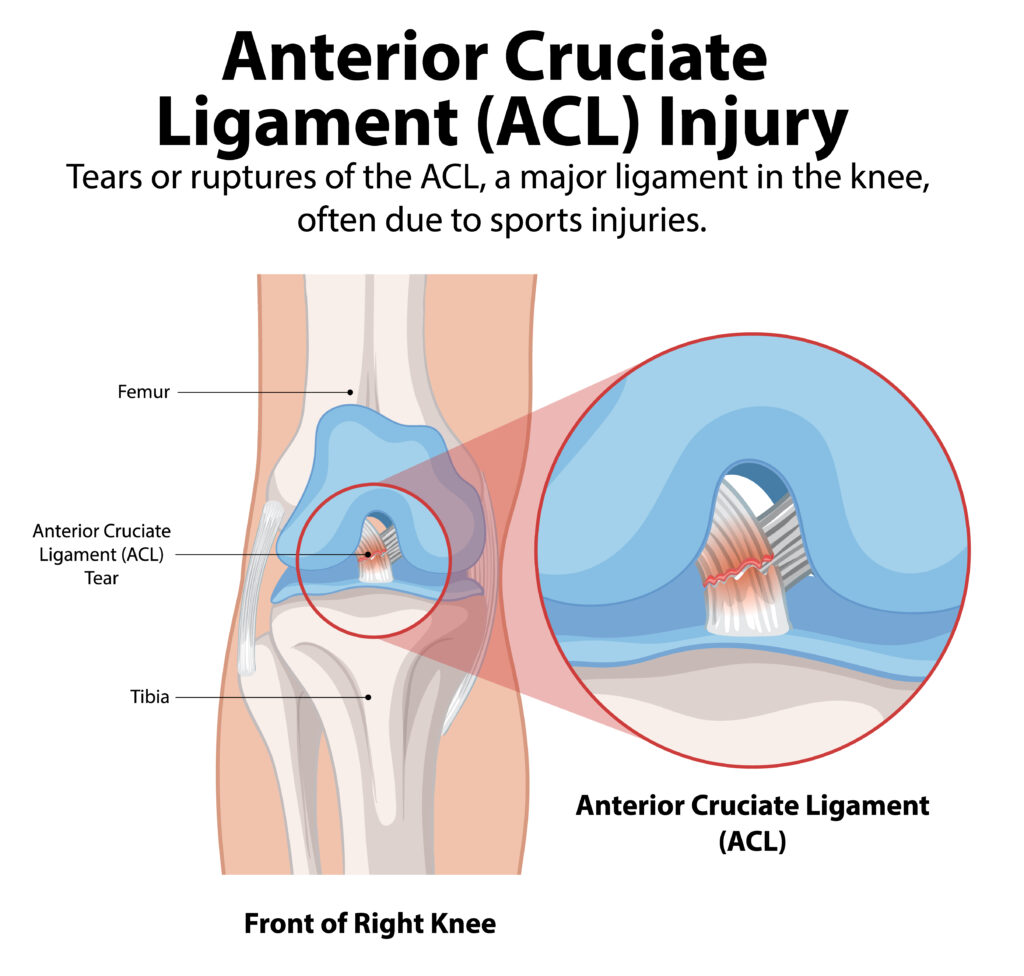
The anterior cruciate ligament (ACL) is crucial for stabilising the knee, connecting the tibia (shinbone) to the femur (thighbone) and preventing forward movement of the tibia. This ligament plays an essential role in knee stability and movement, particularly during activities involving sudden changes in direction.
ACL injuries occur when the ligament is overstretched or torn, typically due to sudden pivots, awkward landings, or direct trauma to the knee. Although commonly associated with athletes, ACL injuries can affect anyone engaging in activities that put stress on the knee joint.
On this page, you’ll learn about:
What Causes an ACL Tear?
ACL injuries happen when the ligament is overstretched, leading to partial or complete tears. Common causes include:
- Sudden changes in direction: Movements like pivoting or cutting, often seen in sports such as basketball, soccer, and football.
- Awkward landings: Poor landing after a jump can put excess strain on the knee.
- Direct impact: Blows to the knee, frequently occurring in contact sports like football and hockey.
- Sudden stopping or deceleration: These actions can strain the ACL significantly.
These injuries are often marked by a “popping” sound, followed by immediate pain, swelling, and difficulty bearing weight on the affected leg.
Who is at Risk for an ACL Injury?
While anyone can experience an ACL injury, some factors increase the risk:
- Athletes involved in sports like football, soccer, skiing, and basketball are more susceptible.
- Women are statistically more prone to ACL injuries due to anatomical differences, muscle strength, and hormonal factors.
- Improper equipment, such as poorly fitted footwear, can increase the risk of injury.
- Artificial turf surfaces, which have been linked to higher ACL injury rates compared to natural grass.
Symptoms of an ACL Injury
Signs of an ACL injury may include:
- A distinct “pop” at the time of injury.
- Intense pain makes it difficult to continue activity.
- Swelling within hours of the incident.
- Instability or a feeling that the knee may give way.
- Limited range of motion due to pain and swelling.
An early diagnosis by a specialist at The Melbourne Orthopaedic Clinic is essential for proper treatment.
Diagnosis and Imaging of ACL Tears and Injuries
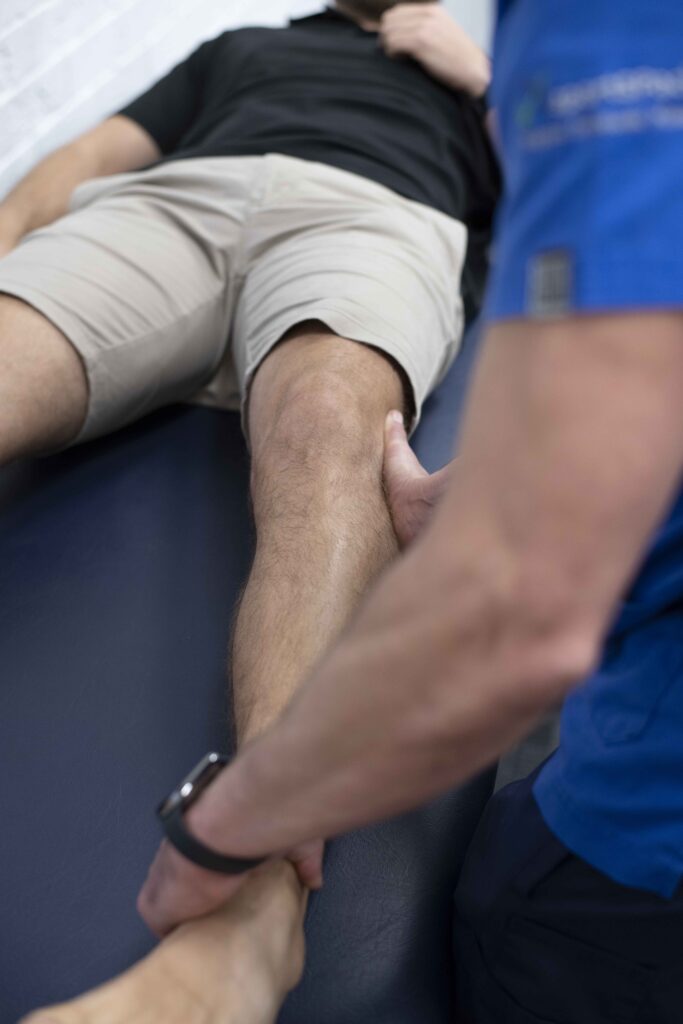
Diagnosing an ACL tear begins with a physical examination, where we assess knee stability, range of motion, and swelling. To confirm the extent of the injury, imaging tests like X-rays or MRIs are often recommended. These help assess the severity and rule out additional damage to the meniscus or cartilage.
Treatment Options for ACL Injuries
The best treatment for ACL injuries depends on the extent of the tear and the patient’s lifestyle goals.
Non-Surgical Treatment
For partial tears or stable knees, we may recommend:
- R.I.C.E therapy (Rest, Ice, Compression, Elevation) to manage swelling and pain.
- Bracing to stabilise the knee during recovery.
- Physiotherapy to strengthen muscles and regain range of motion.
- NSAIDs (Non-steroidal anti-inflammatory drugs) to reduce inflammation.
Surgical Treatment
For full ACL tears or for active individuals, ACL Reconstruction Aurgery is often necessary. Using either an autograft or allograft, we can restore stability and function to the knee. The Melbourne Orthopaedic Clinic offers arthroscopic surgery, a minimally invasive procedure with quicker recovery and less scarring.
Preventing ACL Injuries
Many ACL injuries can be avoided with:
- Strengthening exercises focusing on quadriceps and hamstrings.
- Balance and proprioception training to enhance joint stability.
- Stretching and warm-up routines before physical activity.
- Using proper equipment, including well-fitted shoes and sports gear.
At The Melbourne Orthopaedic Clinic, our orthopaedic specialists are highly experienced in diagnosing and treating ACL injuries. Whether you need conservative care or surgical intervention, we will work closely with you to ensure the best possible outcome for your recovery.