
De Quervain’s Tenosynovitis
A condition characterised by pain and swelling along the thumb side of the wrist
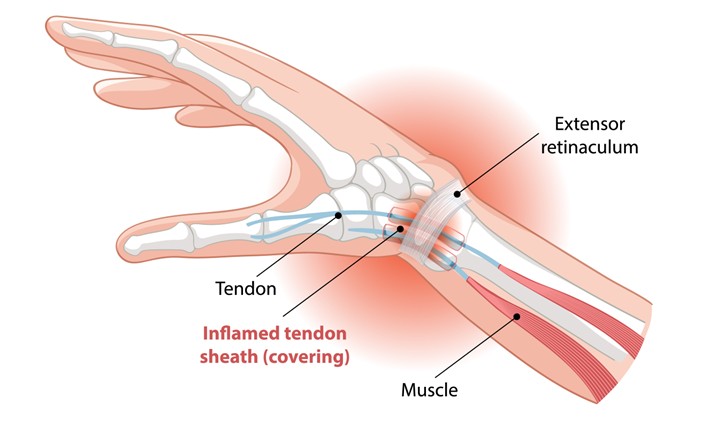
De Quervain’s tenosynovitis is a painful condition affecting the tendons on the thumb side of the wrist. It occurs when the sheath surrounding these tendons becomes inflamed, leading to pain and swelling that can make it difficult to move the thumb and wrist. Often linked to repetitive hand movements or overuse, this condition is common among individuals who perform tasks requiring gripping, lifting, or twisting. At Melbourne Orthopaedic Clinic, Prof. Vera specialise in diagnosing and treating De Quervain’s tenosynovitis to restore mobility and reduce pain.
Causes of De Quervain’s Tenosynovitis
Several factors contribute to the development of De Quervain’s tenosynovitis, including:
- Repetitive Hand Movements: Activities requiring frequent gripping or wrist twisting, such as typing, lifting, or playing certain sports, can strain the tendons.
- Overuse and Strain: Repeated strain or overuse of the thumb and wrist tendons can lead to irritation and inflammation.
- Pregnancy and Hormonal Changes: Hormonal changes during pregnancy can contribute to joint and tendon swelling, increasing the risk of this condition.
- Injury: A direct injury to the wrist or thumb area can also trigger inflammation in the tendon sheath.
Symptoms of De Quervain’s Tenosynovitis
The symptoms of De Quervain’s tenosynovitis often develop gradually and may include:
- Pain along the thumb side of the wrist: Pain may be felt when gripping, twisting, or lifting objects, and can sometimes radiate into the forearm.
- Swelling near the base of the thumb: Swelling may develop on the thumb side of the wrist, sometimes accompanied by a visible lump.
- Difficulty moving the thumb and wrist: Activities involving thumb and wrist movement can become difficult or uncomfortable due to restricted movement.
- Numbness or stiffness: Some individuals may experience numbness, a tingling sensation, or a feeling of stiffness in the thumb or wrist.
Diagnosis of De Quervain’s Tenosynovitis
Medical history
Diagnosis begins with a detailed discussion about your symptoms. Prof. Sallen will ask when the pain started, what activities make it worse, and whether movements such as gripping, lifting, or twisting the wrist trigger discomfort. Information about recent injuries, repetitive hand use, or changes in activity levels can also provide important clues.
Physical examination
A careful examination of the wrist and thumb is the key step in diagnosing De Quervain’s tenosynovitis. This may include:
- Checking for tenderness and swelling over the thumb side of the wrist.
- Assessing thumb movement and grip strength.
- Performing Finkelstein’s test, where you are asked to make a fist with your thumb inside your fingers and gently bend the wrist towards the little finger. Sharp pain along the thumb side of the wrist during this manoeuvre strongly suggests De Quervain’s tenosynovitis.
Imaging
Imaging tests are not always required but may occasionally be used if another condition needs to be excluded.
- Ultrasound can show inflammation or thickening of the affected tendons and their sheath.
- X-rays are not usually needed for diagnosis but may be taken if there is concern about arthritis or another wrist problem.
Establishing the diagnosis
In most cases, a diagnosis can be made based on your history and a physical examination alone. Prof Sallen will explain the findings, rule out other possible causes of wrist pain, and guide you through the most appropriate next steps for treatment.
Treatment Options for De Quervain’s Tenosynovitis
Non-surgical treatments
In many people, symptoms of De Quervain’s tenosynovitis can improve with non-surgical care, particularly when treatment is started early. Options may include:
- Activity modification – Avoiding or adjusting activities that involve repetitive thumb and wrist movements, such as lifting children, gardening, or typing, can help reduce irritation.
- Splinting – A supportive thumb splint (also called a thumb spica splint) may be recommended to keep the wrist and thumb stable while the tendons recover.
- Medications – Non-steroidal anti-inflammatory medicines (NSAIDs) may help ease pain and reduce swelling.
- Corticosteroid injection – In some cases, an injection into the tendon sheath can reduce inflammation and provide relief, either temporarily or long-term.
- Physiotherapy – Hand therapy, stretching, and strengthening exercises may be introduced to restore comfortable movement and prevent recurrence.
When surgery may be considered
Surgical treatment may be recommended if:
- Symptoms are persistent or severe
- Non-surgical options have not provided adequate relief
- There is significant difficulty with daily activities despite other treatments
Surgical release
The procedure for De Quervain’s tenosynovitis involves carefully releasing the tight tendon sheath around the affected tendons to reduce pressure and allow smoother movement.
- Surgery is usually performed as a day procedure under local or general anaesthetic.
- A small incision is made near the base of the thumb to open the tendon sheath.
- The goal is to relieve tendon irritation and restore more comfortable thumb and wrist function.
Recovery after treatment
- After surgery, most people experience gradual relief of pain and improved use of the hand.
- Recovery involves wound care, gentle exercises, and a return to normal activities over a period of weeks.
- Hand therapy may be recommended to support healing and regain strength.
Prof. Sallen will discuss the most suitable treatment approach for your situation, taking into account the severity of your symptoms, your daily activities, and your overall health.