

External Fixation
Stabilising Fractures with Minimally Invasive Techniques
External Fixation is a technique used to stabilise fractures when internal fixation is not suitable. By using an external frame to secure fractured bones, Melbourne Orthopaedic Clinic provides patients with an effective, minimally invasive option that promotes healing and protects soft tissue. Our team is dedicated to ensuring stability, comfort, and the best possible outcomes with this adaptable approach.
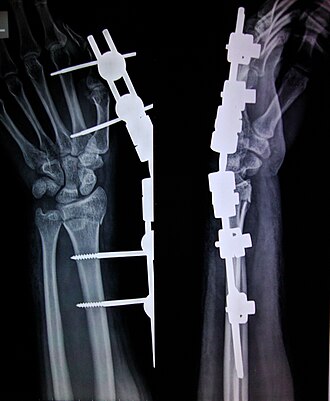
What is External Fixation?
External Fixation involves placing metal pins or screws into the bone fragments on either side of a fracture, which are then connected to an external frame outside the body. This frame holds the bones in the correct position, ensuring stability as they heal.
This technique is particularly effective for:
- Severe fractures where the bone is shattered or displaced.
- Open fractures with wounds that need regular cleaning and monitoring.
- Soft tissue injuries that may be damaged further with invasive internal fixation.
When is External Fixation Recommended?
External Fixation may be advised for:
- Severe Fractures: Such as comminuted (shattered) or complex fractures.
- Infected or Open Fractures: Where internal hardware could increase the risk of infection.
- Soft Tissue Damage: If the surrounding tissue is too damaged to support internal fixation.
- Temporary Stabilisation: Sometimes used as a temporary measure before more definitive surgery.
The External Fixation Procedure
- Anaesthesia: Typically performed under general or regional anaesthesia to ensure comfort.
- Pin Placement: Pins or screws are inserted through the skin into the bone on either side of the fracture.
- Frame Attachment: The pins are connected to a stabilising frame outside the body, which holds the bone fragments in alignment.
- Adjustment Capabilities: Many external frames can be adjusted to correct alignment as healing progresses.
Recovery and Rehabilitation
- Early Weight-Bearing: In some cases, patients may be able to bear weight on the limb sooner than with other stabilisation methods, depending on the fracture location and healing progress.
- Pin Site Care: Patients are taught how to care for pin sites to prevent infection, with regular follow-ups for monitoring.
- Physiotherapy: Targeted exercises help restore mobility and strength, while the frame stabilises the fracture.
- Removal of the Frame: Once the bone has sufficiently healed, the frame and pins are removed, often without requiring another major surgery.
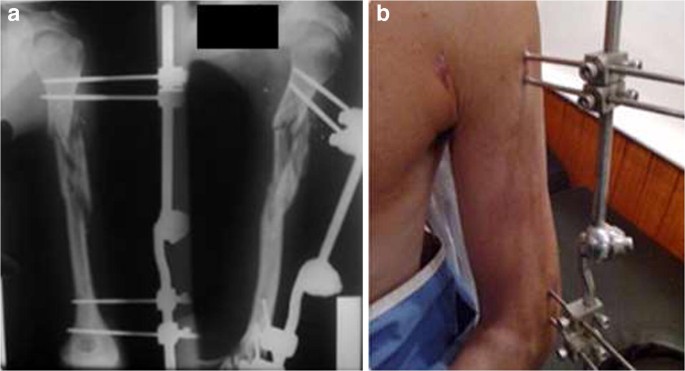
Benefits of External Fixation
- Minimally Invasive: Reduces the need for open surgery, which is beneficial in cases of open fractures or severe soft tissue injuries.
- Adjustability: Allows for minor adjustments in alignment as the bone heals.
- Early Functionality: Patients may retain some functionality of the affected limb while it is stabilised.
- Temporary Solution: Can be removed once healing has progressed, potentially reducing complications associated with long-term internal hardware.
Risks and Complications
While External Fixation is generally a safe procedure, potential risks include:
- Pin Site Infections: Regular pin site care and hygiene are essential to avoid infection.
- Pin Loosening: Rarely, pins may become loose and require adjustment or replacement.
- Scarring: Minor scarring can occur around pin sites.
- Discomfort: Some patients experience discomfort from the external frame, which is managed with support and pain relief as needed.
Achieving Stable, Effective Recovery with External Fixation
External Fixation offers a practical and efficient solution for managing complex fractures, especially when traditional methods are unsuitable. At Melbourne Orthopaedic Clinic, we use advanced external fixation techniques to stabilise injuries and allow for focused healing, helping patients on their journey back to mobility and functionality.